 Skip to content
The collision repair industry is changing fast. Repairs now involve advanced electronics, new materials, and strict manufacturer procedures. If you want a career that grows with you, proper training is the strongest way to enter or advance inside a collision repair shop. It prepares you for real shop environments, modern repair workflows, and the expectations of a certified collision repair center.
At Mr. Dent Collision Repair in Ozark, MO, we have seen how training transforms new technicians into skilled professionals. This article explains today’s training options, the technical skills you will need, and the opportunities available once you complete a quality program. You will also learn what employers expect and how training prepares you for long-term success in an auto body collision repair shop that services modern vehicles every day.
Why Training Matters in Today’s Collision Repair Industry
Modern vehicles contain sensors, cameras, computers, and materials that did not exist in older models. That change affects how every repair is performed. Structural components are stronger, thinner, and lighter. Electrical systems connect to nearly every part of the vehicle. Driver assistance systems require careful calibration after repairs.
Clear industry data backs these changes. According to the National Safety Council’s findings on advanced driver assistance systems adoption, a growing percentage of vehicles are equipped with safety systems such as blind spot monitoring, lane departure alerts, and front crash prevention. Each system must work correctly after collision repairs.
Training helps you understand these systems. It also reduces the risk of repair errors. Research from ADAS Depot shows that improper calibration can contribute to failures in driver-assist technology, which affects safety on the road. Their insights on ADAS calibration accuracy highlight how sensitive modern systems are.
As one of the trusted collision repair specialists in the region, we know that accurate repairs depend on trained technicians. This is why training matters. It prepares you to diagnose advanced issues and follow repair steps that protect vehicle safety.
Training Pathways That Help You Build Your Foundation
You have several ways to train for this field. Each offers a different level of depth and prepares you for different roles inside a local collision repair center in Ozark, MO, environment.
Training Pathway Comparison
| Training Path | Typical Length | Best For | Key Outcome |
| I-CAR Courses | Short to moderate | Fast advancement and upskilling | Recognition in certified shops |
| OEM Programs | Moderate to long | Brand-specific repair roles | High-value specialty positions |
| Technical Colleges | 12 to 18 months | Beginners who need full foundation | Broad hands-on collision repair skills |
You can complete one path or combine several. Many technicians start with technical college, add I-CAR courses, then pursue OEM training. The field rewards continuing education so that you can grow over time.
I-CAR Training and Its Role in Professional Growth
I-CAR is one of the most recognized providers of collision repair education. Shops rely on this training because it follows industry standards and provides structured learning. Courses cover structural repair, non-structural repair, refinishing, scanning, calibration, electrical work, and safety.
A recent industry update on I-CAR’s national conference highlights their work on expanding training access and improving role-based learning paths. You can read the detailed report in PR Newswire’s feature on I-CAR’s advancement of industry standards.
For technicians, I-CAR training offers direct benefits. It improves your understanding of OEM requirements. It makes you a more capable team member. It also increases your value when applying to a collision repair shop that wants consistent, safe, and accurate repairs.
Why OEM Training Sets You Apart in the Job Market
OEM training focuses on the specific repair needs of each manufacturer. Every brand uses unique materials and designs. Some rely on aluminum structures. Others use advanced bonding or proprietary rivets. Several models require specific scan tools or measurement systems.
OEM training teaches you how to follow each manufacturer’s process. It also helps you understand how materials behave and why precise steps matter. That knowledge prepares you for advanced repair roles in a certified collision repair center that services late-model vehicles.
OEM training can also improve your earning potential. Many shops pay more to technicians trained in high-skill areas such as structural repair, electrical diagnostics, or specialty materials. When you complete these programs, you gain a competitive advantage.
How Technical College Programs Help You Start Strong
Technical colleges offer complete training for beginners. These programs give you hands-on practice and teach core skills such as:
- Frame measurement
- Panel replacement
- Welding
- Plastic repair
- Refinishing
- Disassembly and reassembly
- Basic electrical systems
Apprenticeship programs add real shop experience and mentorship. If you are new to the industry, this route helps you understand the entire repair workflow before moving on to advanced training.
Core Skills That Every Collision Repair Technician Needs
Training programs should prepare you for specific skill areas. These skills support your daily work inside any repair facility.
Structural and Non-Structural Repair
Structural repair involves components that affect vehicle stability and crash performance. Training teaches you how to measure alignment, identify structural damage, and work safely with high-strength steel and aluminum. Non-structural repair covers bumpers, exterior panels, door assemblies, and cosmetic finishes.
Scanning and Electronic Diagnostics
Modern vehicles communicate through interconnected modules. Scanning is the process of reading those systems and identifying issues. Training helps you understand diagnostic codes, module communication, and pre-repair scan requirements.
ADAS Calibration
ADAS systems must be calibrated after collision repairs. They are sensitive to alignment changes and component removal. Research published by CCC Intelligent Solutions highlights how ADAS influences repair workflows and diagnostics. Their analysis of ADAS’s impact on vehicle diagnostics explains why accurate calibration matters.
Training helps you follow the correct steps when performing this work. It also prepares you for roles involving electronic safety systems.
Refinishing and Color Match
Refinishing involves careful surface preparation, paint application, blending, and curing. You learn how to use waterborne and solvent-based coatings and how to achieve consistent, smooth finishes. Training also teaches you to use digital colour-match tools that reduce guesswork.
Technical Skill Categories That Shape Your Career
Training covers a range of skills. The table below breaks these categories into simple sections.
Technical Skill Categories
| Skill Category | What You Learn | Why It Matters |
| Structural Repair | Measuring, cutting, bonding, welding | Supports vehicle safety |
| Non-Structural Repair | Panels, plastics, cosmetic adjustments | Improves appearance and function |
| Scanning | Electrical checks and code reading | Identifies underlying issues |
| Calibration | ADAS adjustments and verification | Ensures driver-assist accuracy |
| Refinishing | Paint systems and blending | Ensures quality and colour match |
| Documentation | Repair notes and parts lists | Supports workflow and approvals |
These categories give you the foundation needed for work in a local collision repair center in Ozark, MO.
Career Opportunities After Completing a Training Program
When you complete your training, several career paths become available. Each path fits a different set of strengths.
Blueprinting and Damage Analysis
Blueprinting is the process of identifying all repair needs. You perform scans, remove trim panels, inspect structures, and prepare documentation. This role requires careful thinking and a strong understanding of repair processes.
Structural Technician
Structural technicians repair the core of the vehicle. They work with high-strength steel, aluminum, and welded assemblies. Collision industry data shows that more than half of repair jobs involve structural involvement. This creates a steady need for trained professionals who can handle these repairs correctly.
Refinish Technician
Refinish technicians complete paint work. They are responsible for colour matching, blending, and finishing. This role requires patience and strong attention to detail.
What Employers Expect From New Technicians
Shops expect entry-level technicians to understand the basics of repair work. They also expect a willingness to learn and follow procedures.
Employer Expectations for New Technicians
| Expectation | What It Means | Why It Matters |
| Training Credentials | Proof of course completion | Builds trust |
| Procedural Knowledge | Ability to follow OEM guidance | Supports accuracy |
| Scan Tool Use | Basic diagnostic ability | Supports calibration steps |
| Documentation | Notes and photos | Supports insurance requirements |
| Communication | Team coordination | Keeps workflow organized |
At Mr. Dent Collision Repair, these expectations are part of how we maintain quality and consistency. They help us deliver dependable results as one of the trusted collision repair specialists in the region.
How Mr. Dent Collision Repair Supports Technician Growth
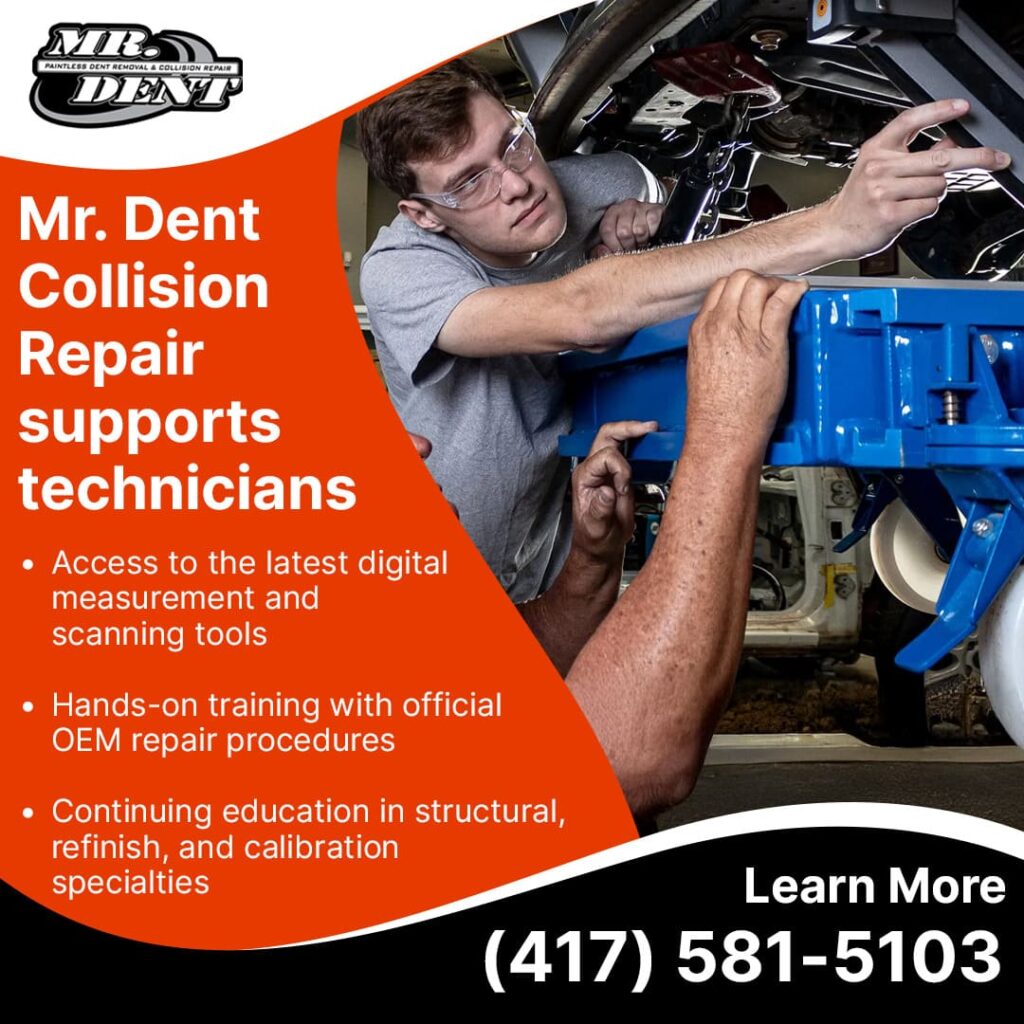
At Mr. Dent Collision Repair, we support technicians who want to grow in this field. We provide access to modern equipment, including digital measurement systems, advanced scan tools, and high-quality paint systems. We also support our customers with services such as pick-up and delivery, after-hours drop-off, and convenient online estimate requests, which help streamline the repair experience. We follow OEM repair procedures, which help our technicians learn real repair standards used across the industry.
We also encourage continuing education. Technicians can expand into structural repair, calibration, refinishing, and electrical diagnostics. We believe in supporting long-term growth, not just short-term job placement.
How to Begin Your Collision Repair Training Journey
Here is a simple sequence to help you get started:
- Explore training options in Missouri.
- Review I-CAR beginner courses.
- Visit shops to observe their workflow.
- Ask technicians about their daily tasks.
- Begin an entry-level role to gain hands-on experience.
- Build a portfolio of your training and repair work.
This structured start helps you develop the skills needed for long-term success.
Frequently Asked Questions
How long does training take?
Training length varies. Technical programs may run for one year or more. I-CAR and OEM courses offer shorter modules. Most technicians continue learning throughout their careers.
Is OEM training required?
Not for entry-level work. It becomes valuable as you advance and handle newer models.
Is calibration training important?
Yes. Modern repairs require scanning and calibration to support driver safety systems.
Is collision repair a stable career in Missouri?
Yes. Vehicles are more complex than ever, and shops need trained technicians in Ozark and nearby areas.
Start Your Career with the Right Skills
Training opens the door to stable career opportunities in collision repair. If you want to build a strong future in this field, Mr. Dent Collision Repair can guide you. We also offer 6 months of 0% financing on repairs, giving customers flexible payment options as they navigate unexpected collision expenses. Contact us at (417) 581-5103 to learn how you can begin your training journey and explore the opportunities available in Ozark and the surrounding areas.
