 Skip to content
Quick Summary
- Yes, collision repair can affect ADAS safety systems if not handled correctly
- Even minor accidents can misalign sensors, cameras, and radar systems
- Proper ADAS calibration is critical for safety and performance
- OEM-certified collision repair in Ozark, MO, ensures these systems work as designed
If your vehicle has been in an accident, even a minor one, there is something most drivers never think about.
Your safety systems may no longer be working correctly.
Modern vehicles rely heavily on Advanced Driver Assistance Systems, also known as ADAS, to help prevent accidents and protect you on the road. These systems include features like lane departure warnings, automatic emergency braking, and adaptive cruise control.
But here is the problem.
Even small collisions can throw these systems out of alignment.
So the real question becomes:
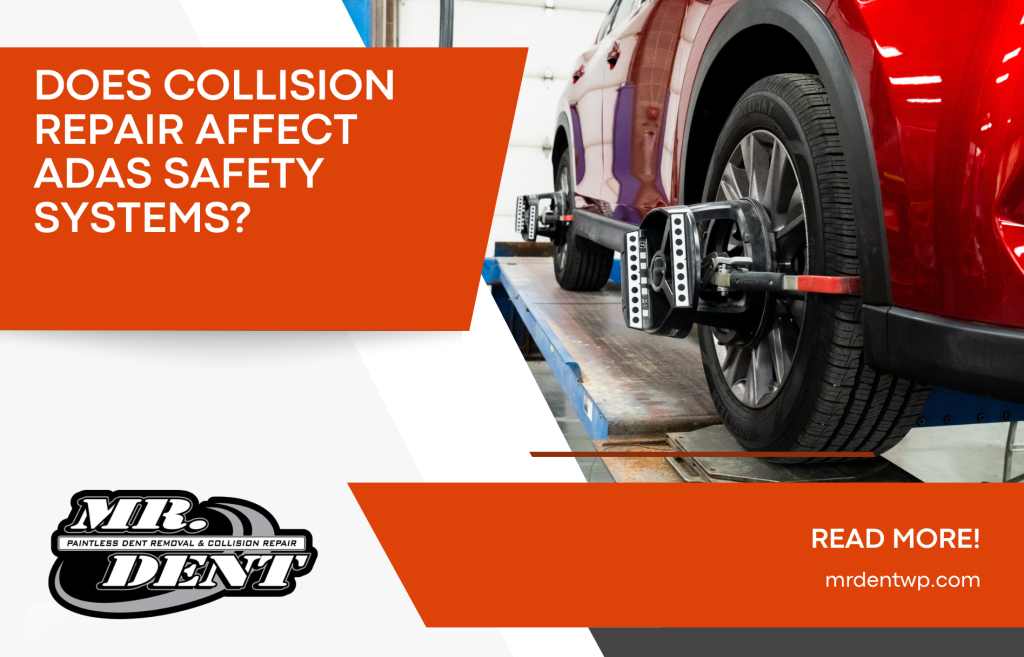
Does collision repair affect ADAS safety systems?
The answer is yes, and understanding why could make a major difference in your safety after a repair.
What Are ADAS Safety Systems?
ADAS stands for Advanced Driver Assistance Systems. These are built-in technologies designed to assist drivers and reduce the risk of accidents.
Common ADAS features include:
- Forward collision warning
- Automatic emergency braking
- Lane departure warning
- Blind spot monitoring
- Adaptive cruise control
According to the National Highway Traffic Safety Administration, these systems are designed to reduce crashes and improve road safety, which you can learn more about through their ADAS overview to better understand how they function.
Yes, Collision Repair Can Affect ADAS Systems
Short Answer
Yes, collision repair can absolutely affect ADAS systems, even in minor accidents.
Why This Happens
ADAS systems rely on precise positioning.
- Cameras must be perfectly aligned
- Radar sensors must be calibrated to exact angles
- Mounting points must remain unchanged
Even a small shift can cause big problems.
For example:
- A slightly misaligned camera may not detect lane markings correctly
- A radar sensor may misjudge the distance between vehicles
- Emergency braking may activate too late or not at all
Cost: How Much Does ADAS Calibration Cost in Ozark, MO?
Typical Cost Range
ADAS calibration costs typically range from:
- $150 to $500 for simple recalibration
- $500 to $1,500 or more for complex systems
What Impacts Cost
- Number of sensors involved
- Type of vehicle
- Severity of the collision
- Whether static or dynamic calibration is required
While this may seem like an added expense, skipping calibration can lead to much bigger safety risks and potential liability.
Problems and Risks of Skipping ADAS Calibration
This is where transparency matters most.
1. False Sense of Safety
Your dashboard may show no warning lights, but systems may still be inaccurate.
2. Increased Accident Risk
If systems fail to respond correctly, it can increase your risk of another accident.
3. Liability Issues
Improper repairs can lead to serious legal and insurance complications if another accident occurs.
4. Reduced Vehicle Value
Vehicles without proper calibration may lose value or fail inspections.
OEM vs Non-Certified Repairs for ADAS
OEM-Certified Repair
- Follows manufacturer calibration procedures
- Uses OEM diagnostic tools
- Ensures proper system functionality
Non-Certified Repair
- May skip calibration steps
- May not have proper equipment
- May rely on guesswork instead of specifications
If you want to understand how certified repairs ensure proper calibration, you can learn more through our OEM-certified collision repair page before deciding where to take your vehicle.
Best Practices for ADAS Collision Repair in Ozark, MO
1. Always Perform a Pre- and Post-Scan
This identifies hidden issues before and after repairs.
2. Ensure Proper Calibration
Calibration should be done:
- After sensor replacement
- After structural repairs
- After alignment changes
3. Choose a Certified Repair Facility
Not all shops have the equipment or training needed.
4. Verify Equipment and Training
Proper ADAS calibration requires:
- Controlled environments
- Manufacturer software
- Specialized tools
5. Work With a Shop That Handles Everything
A shop that manages the full repair process reduces errors and ensures consistency.
If you are currently dealing with accident damage, you can learn how the full repair process works by visiting our collision repair in Ozark, MO page, so you know what to expect before starting repairs.
Reviews and Industry Insights
Industry organizations like I-CAR emphasize that modern collision repair is no longer just physical repair.
It now includes:
- Electronics
- Software calibration
- Safety system validation
You can explore how training standards support proper repairs through I-CAR training standards to better understand why certified technicians matter.
Drivers are increasingly aware that proper calibration is not optional; it is essential.
If you want to see the level of detail that goes into proper repairs, you can view real examples by visiting our see our work page to better understand the difference.
Why This Matters for Ozark, MO Drivers
With more advanced vehicles on the road in Ozark, MO, proper repair procedures matter more than ever.
Choosing the right repair shop ensures:
- Your safety systems work correctly
- Your vehicle performs as designed
- You avoid future problems and costs
What many drivers do not realize is that even a small misalignment in a sensor or camera can affect how your vehicle reacts in real-world driving situations. On busy roads around Ozark and nearby areas like Nixa and Springfield, that difference can impact how quickly your vehicle detects another car, applies the brakes, or keeps you in your lane.
Modern vehicles are engineered with tight tolerances, meaning there is very little room for error during repairs. If a shop skips calibration steps or does not follow manufacturer procedures, your vehicle may look repaired on the outside but still have hidden safety risks underneath. That is why proper post-repair scanning and calibration are just as important as the physical repair itself.
Working with a shop that understands these systems gives you confidence every time you get behind the wheel. It also helps protect your long-term investment by ensuring your vehicle maintains its performance, reliability, and resale value.
Mr. Dent Collision Repair has been serving Ozark since 1993 with a focus on proper repairs, safety, and customer care, helping drivers navigate complex repairs with confidence and peace of mind.
FAQs
Q: Does a minor accident require ADAS calibration?
A: Yes, even a minor accident can require ADAS calibration. Many sensors and cameras are mounted behind bumpers, windshields, or mirrors, which means even a small impact can shift their position. These systems rely on extremely precise alignment to function correctly. If they are even slightly off, features like lane departure warning or automatic braking may not respond as intended. That is why a proper inspection and calibration are recommended after almost any collision.
Q: What happens if ADAS is not calibrated after repair?
A: If ADAS systems are not calibrated after a repair, they may provide inaccurate readings or fail. This can lead to delayed braking, missed obstacle detection, or incorrect lane positioning. In some cases, the system may appear to work normally but respond too late in real driving situations. This creates a false sense of safety and increases the risk of another accident.
Q: How long does ADAS calibration take?
A: ADAS calibration can take anywhere from a few hours to a full day, depending on the vehicle and the systems involved. Some vehicles require static calibration inside a controlled environment, while others require dynamic calibration through specific driving conditions. More advanced vehicles with multiple sensors and cameras may take longer to properly calibrate.
Q: Will my insurance cover ADAS calibration?
A: In many cases, insurance will cover ADAS calibration if it is required as part of a proper collision repair. However, coverage depends on your specific policy and the insurance company’s guidelines. A reputable collision repair shop can work with your insurance provider to document why calibration is necessary and help ensure it is included in the repair process.
Q: Can I drive my car without ADAS calibration?
A: Technically, you may still be able to drive your vehicle, but it is not recommended. Without proper calibration, safety features like automatic emergency braking or blind spot detection may not function correctly. This increases your risk on the road and defeats the purpose of having those safety systems in the first place.
Q: What is the difference between static and dynamic calibration?
A: Static calibration is performed inside the shop using specialized equipment and targets to align sensors and cameras precisely. Dynamic calibration, on the other hand, requires driving the vehicle under specific conditions so the system can recalibrate itself in real time. Some vehicles require one method, while others require both to ensure complete accuracy.
Q: How do I know if my car has ADAS?
A: Most newer vehicles come equipped with ADAS features. If your vehicle has systems like lane departure warning, adaptive cruise control, forward collision warning, or automatic emergency braking, it uses ADAS technology. You can also check your owner’s manual or ask your repair shop to confirm which systems your vehicle has.
Q: Do all collision repair shops perform ADAS calibration?
A: No, not all repair shops have the equipment, space, or training required to perform proper ADAS calibration. Calibration requires specialized tools, manufacturer software, and controlled environments. That is why it is important to choose a shop that is properly equipped and trained to handle modern vehicle technology.
Q: Does windshield replacement require ADAS calibration?
A: Yes, in many vehicles, the front-facing camera used for ADAS is mounted to the windshield. If the windshield is replaced, the camera must be recalibrated to ensure it is aligned correctly. Skipping this step can cause systems like lane assist or collision warning to malfunction.
Q: How can I tell if my ADAS system is not working properly?
A: Signs of a misaligned or malfunctioning ADAS system may include warning lights on your dashboard, inconsistent alerts, or features that do not respond as expected. However, not all issues trigger a warning, which is why a professional scan and calibration check is the best way to confirm everything is working correctly.
Get Your ADAS Systems Checked After Collision Repair in Ozark, MO
If your vehicle has been in an accident, do not assume your safety systems are working correctly.
You can request your free estimate by visiting our contact page to get started, or you can stop by and meet our team in person at 2116 N 20th St, Ozark, MO 65721 by visiting our Ozark location page to have your vehicle inspected by a certified repair expert. At Mr. Dent Collision Repair, every repair is completed with one goal in mind: You’re Driving Our Reputation.
